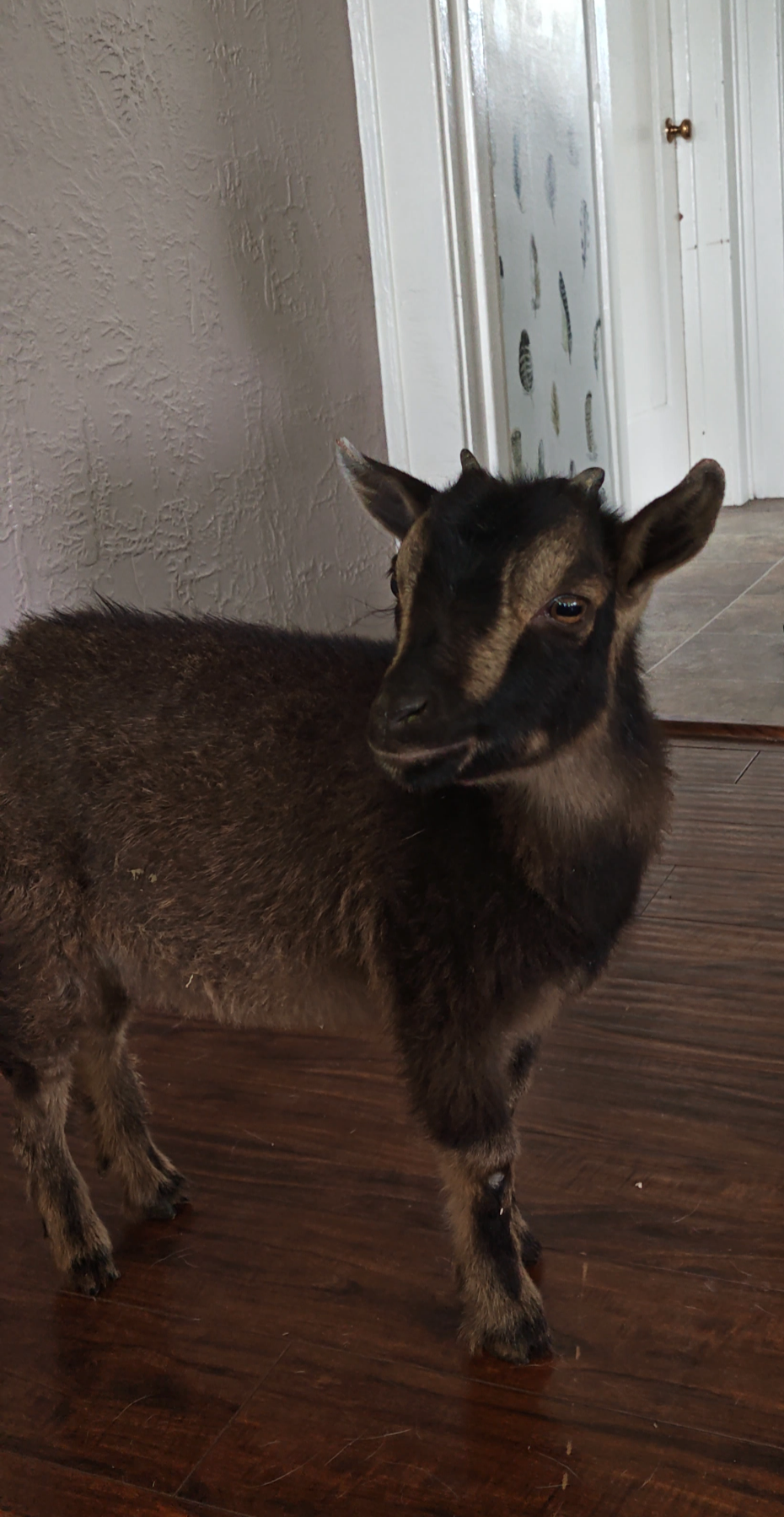
Princess - the one who survived.
Disclaimer: I am not a veterinarian. The following recovery attempt reflects a historical account of an emergency situation under unique, isolated circumstances. It is not medical or veterinary advice. Always consult a licensed veterinarian to establish an official treatment plan, safe alternative medications, and accurate, safe dosages for your livestock.
This is the story of our first weeks of goat-keeping, the personal decisions we made during an emergency situation over a holiday weekend without access to a veterinarian. Please note this is a historical account of what happened, not a guide or recommendation for others.
The Hidden Danger: Bringing Our First Goats Home
Our journey began like many others, fueled by excitement and a desire to expand our homestead. When we first got into goats, we purchased four Nigerian dwarf goats; one was said to be a 6 month old doe, the other three around 3 months old.
The day after bringing them home, the “6 month old” doe sloughed (self-aborted) a fully developed kid (baby goat), minus the body hair. There were no indications she was pregnant. If she truly was only 6 months old, having sloughed a fully developed kid aside from the hair, would’ve placed her towards the end of 4th month gestation; having been bred at just 1 or 2 months old.
She appeared otherwise fine, and so we assumed it was stress from the move, plus her young age. We monitored her closely and watched for her to pass the placenta, which she did within 6 hours. Naively, we thought we were in the clear. We later learned that small ruminant abortions should always be treated as a major biosecurity and infectious disease warning sign. Thankfully, that was not the case here.
Fast forward three days... We found Mama Goat suddenly passed away. There were no signs of illness or injury on her or within the shelter. We naively assumed it was a tragic complication of a young, first-time mother.
Red Alert: Spotting the Deadly Symptoms of Coccidiosis
When I checked on the remaining kids around 6:00 am the next morning, everyone was fine. However, around 7:00am, on my way back to the house from tending to the horses, my Australian Shepherd began frantically running between the goats and me, whimpering and barking. He didn’t stop until I reached their shelter. I hadn’t planned on checking on them so soon, but he was clearly telling me something. I listened.
Inside the shelter, I found Butters on his front knees, head drooping to the ground. His ears and mouth were cold, and green, pudding-like scat piles throughout their shelter. I scooped him up, rushed him inside, wrapped him in a wool blanket and turned the space heater onto us. I began researching the symptoms, and found it was likely coccidiosis (a severe parasite infection in the gut). Because it was a holiday weekend in a rural area, I was forced to make emergency decisions without access to a veterinarian.
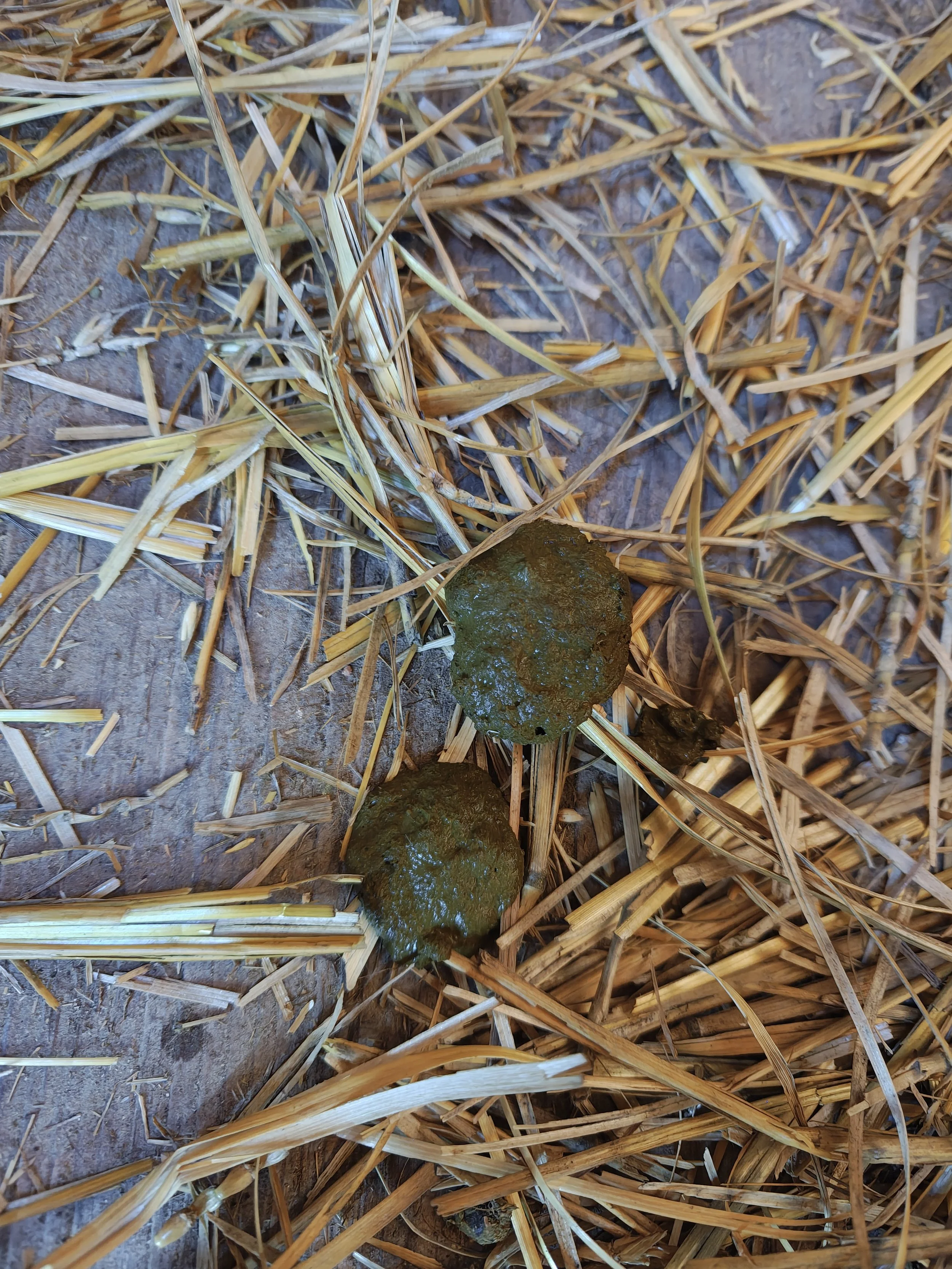
The coccidiosis scat.
My husband took over caring for the buck, while I rushed to town for medications. As I walked into the livestock care aisle, I got the text: “Butters passed away”. Heartbroken but determined, I grabbed every supply item I thought might be needed to save the last two goats, checked out, and high-tailed it home to care for the last two.
Our Immediate Actions:
Medication: Due to an emergency situation and only one Coccidia medication available in town, we were forced to use an over-the-counter cattle coccidia treatment off-label, knowing it required veterinary guidance we couldn't get at the time. Note: Many over-the-counter coccidia treatments act as thiamine-blockers. Using them off-label without a vet carries a severe risk of causing fatal neurological issues (like goat polio) if thiamine levels are not professionally managed.
Sanitation: Deep cleaned and sanitized the entire shelter.
Elevation: Moved hay into a horse netted hay bag, and hung it 6 inches above the ground, to stop fecal contamination of hay.
Prevention: Placed water, baking soda, and mineral bowls up on pedestals to prevent fecal contamination.
The next morning, the last two kids were doing great! No symptoms of weakness, and passed the FAMACHA scoring. They were eating, drinking, and chewing cud normally. I monitored them every 30-60 minutes throughout the day. Yet, at 4:30pm that evening, the second buck was suddenly on his front knees, and weak. His ears and mouth were cold, with pale pink eyelids, and dog-like scat throughout the shelter. Here we go again.
I scooped him up, ran inside, turned on the space heater, wrapped him in a wool blanket on my lap, and the heater blowing underneath the blanket onto us. His body temperature was a terrifying 95.6ºF. We spent 3.5 hours fighting to warm him up, but his temperature plateaued at 97.7ºF. He couldn’t recover, and he sadly passed away around 8pm.
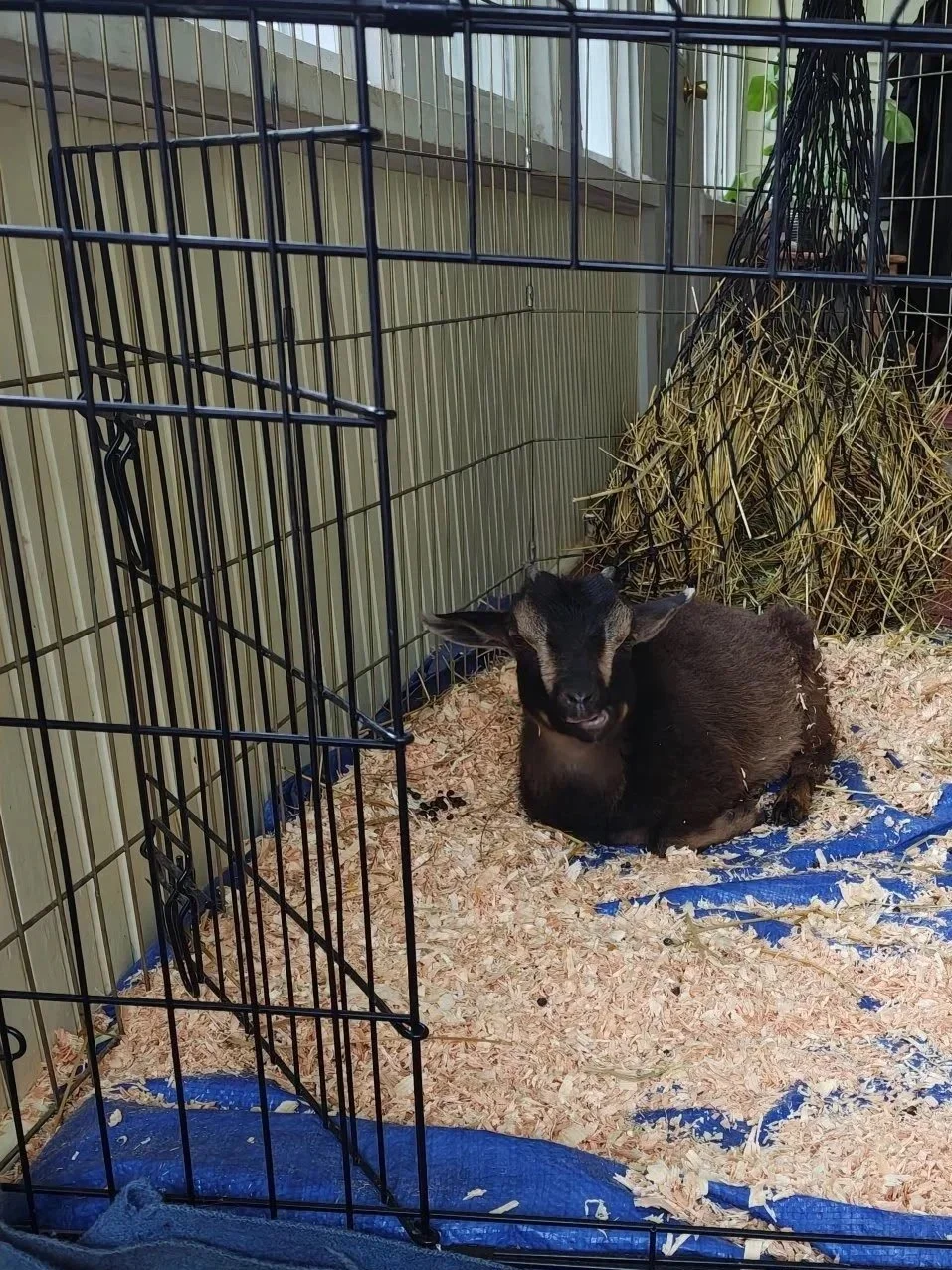
Princess is her makeshift pen.,
We were down to our very last goat, and because goats are herd animals, they cannot be kept alone. My husband helped me makeshift a pen separate of the goat’s shelter where the outbreak occurred, and I slept on a futon next to her pen. This kept her safe from the elements, provided her company, and allowed for constant health monitoring. She was a trooper.
Tending to Princess
She successfully finished her multi-day coccidia medication treatment. On day five, I was able to get in contact with a vet. We discussed the weekend’s events, interventions, and the plan for Princess’s recovery. We began a heavy focus on restoring her compromised digestive system and fighting off severe anemia. For the first few days of her recovery, we focused heavily on her vitamin B and iron level, as well as probiotics to repair her digestive tract.
Being a stay-at-home mom, I was able to clean her pen two to three times a day, while she stayed in her makeshift pen. While cleaning, we let her roam.
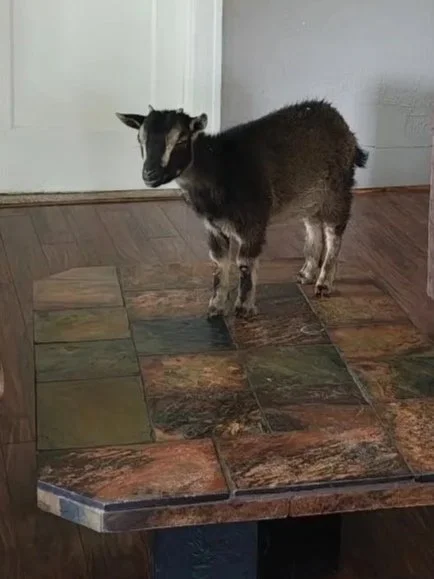
Princess didn’t hesitate to jump on all the things. I didn’t hesitate to sanitize all the things.
A couple of weeks later, her gums and eyelids finally regained their healthy pink color, feces returned to normal goat berries, energy skyrocketed, and her intermittent bloating completely ceased. She was finally in the clear.
We waited until she was fully recovered, her thiamine levels were stable, and her rumen was functioning perfectly before we named her and brought home new companions. When she had recovered, our four-year-old son chose the perfect name: Princess.
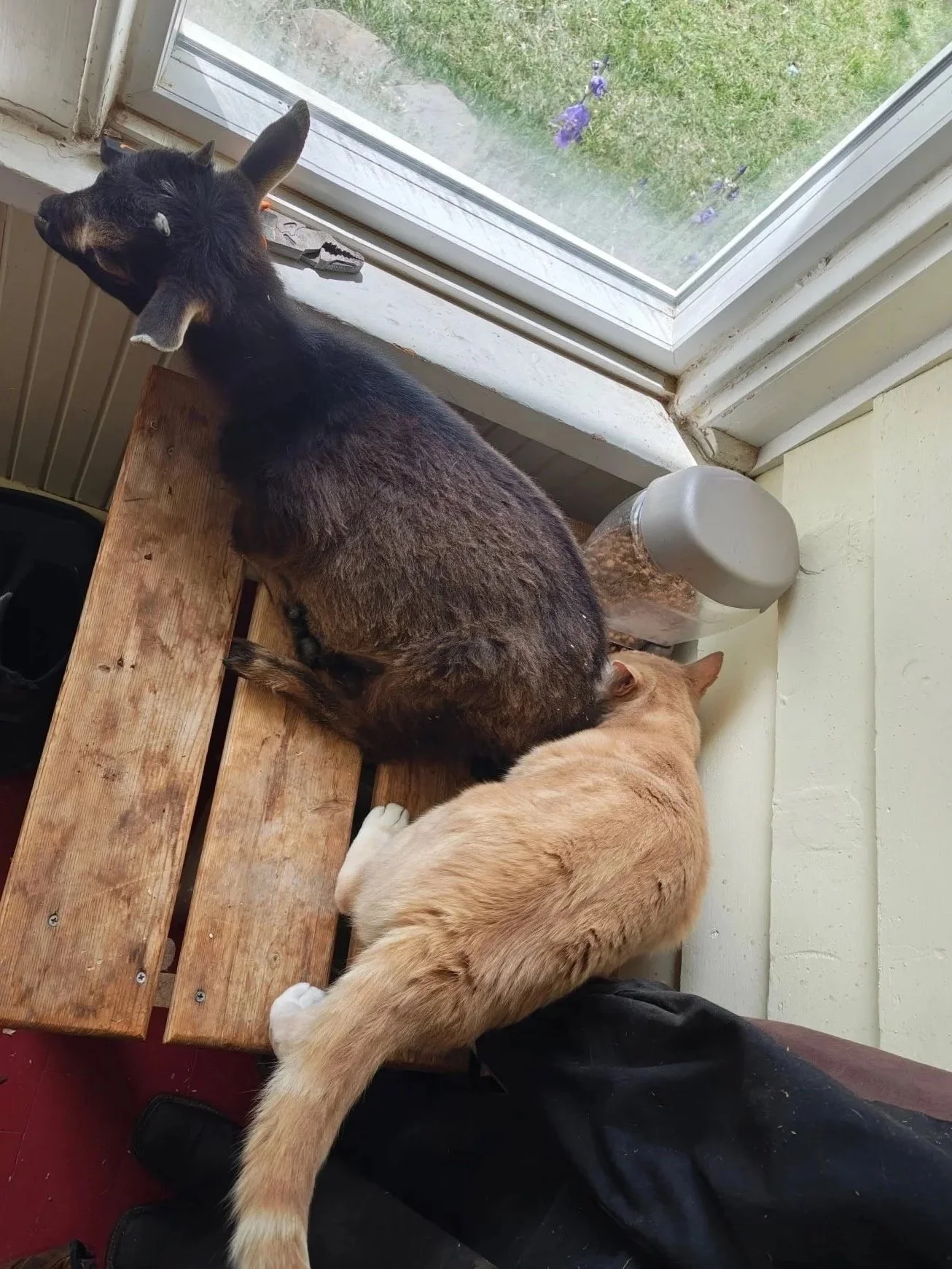
Princess and our ranch cat became friends.
Where We Went Wrong Initially
Looking back, our lack of experience led to four critical mistakes that created the perfect storm for this parasite outbreak:
Not Vetting Prior: We did not ask enough questions, the right questions, nor did we assess the goats’ health prior to purchase and relocation.
Mineral Block Mistake: We learned that unlike horses and cattle, goats require free-choice, loose goat-specific minerals to maintain their health.
Ground-Feeding Danger: Goats are incredibly susceptible to internal parasites. Feeding hay on the ground where they urinate and defecate is an open invitation for reinfection. Feed and water must always be elevated.
The Care/Emergency Kit: I have emergency/care kits ready for us and every animal in our care, but I hadn't gotten around to building one for the goats before bringing them home. This was my biggest mistake.
Lessons Learned From Our First Week
We learned through profound chaos and loss, but that tragedy forced us to become much better caretakers. If you are thinking about raising livestock, please do not let our experience scare you away from getting goats.
Let our mistakes simply be a reminder to plan ahead. I started this blog to share our personal lessons, with the hope that our stories might help other beginners navigate their own early days through preparation and knowledge. In future blog posts, I’ll share the changes we chose to make in our herds and what we look out for now as we continue our homesteading journey.